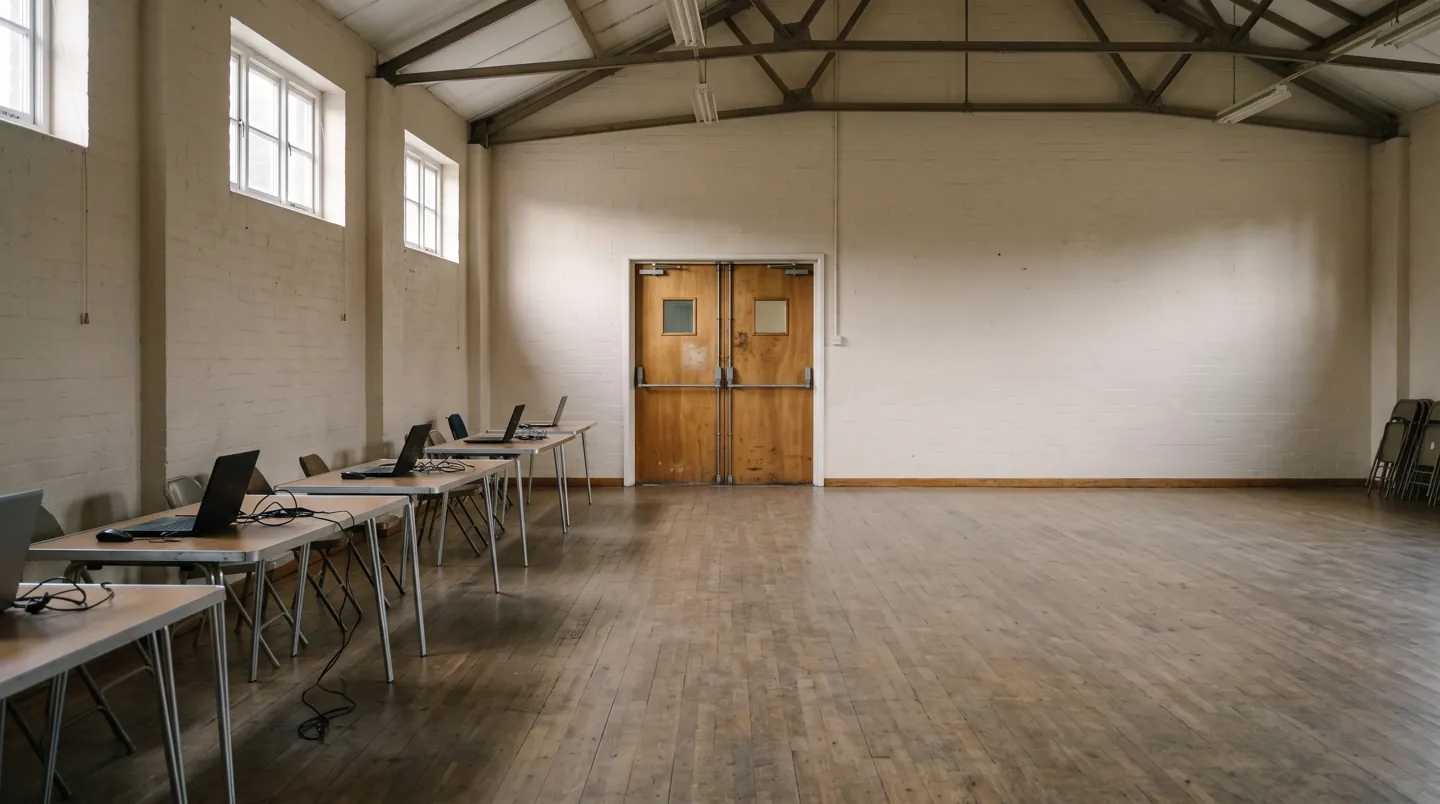
Community tech clubs often meet in village halls and community centres they hire for the evening.
The hall's owner stays in charge of fire safety, but hirers usually take on some checks on the day. This independent guide sums up GOV.UK and Home Office guidance for England. It is not a club, venue or church, and it is general information, not legal advice.
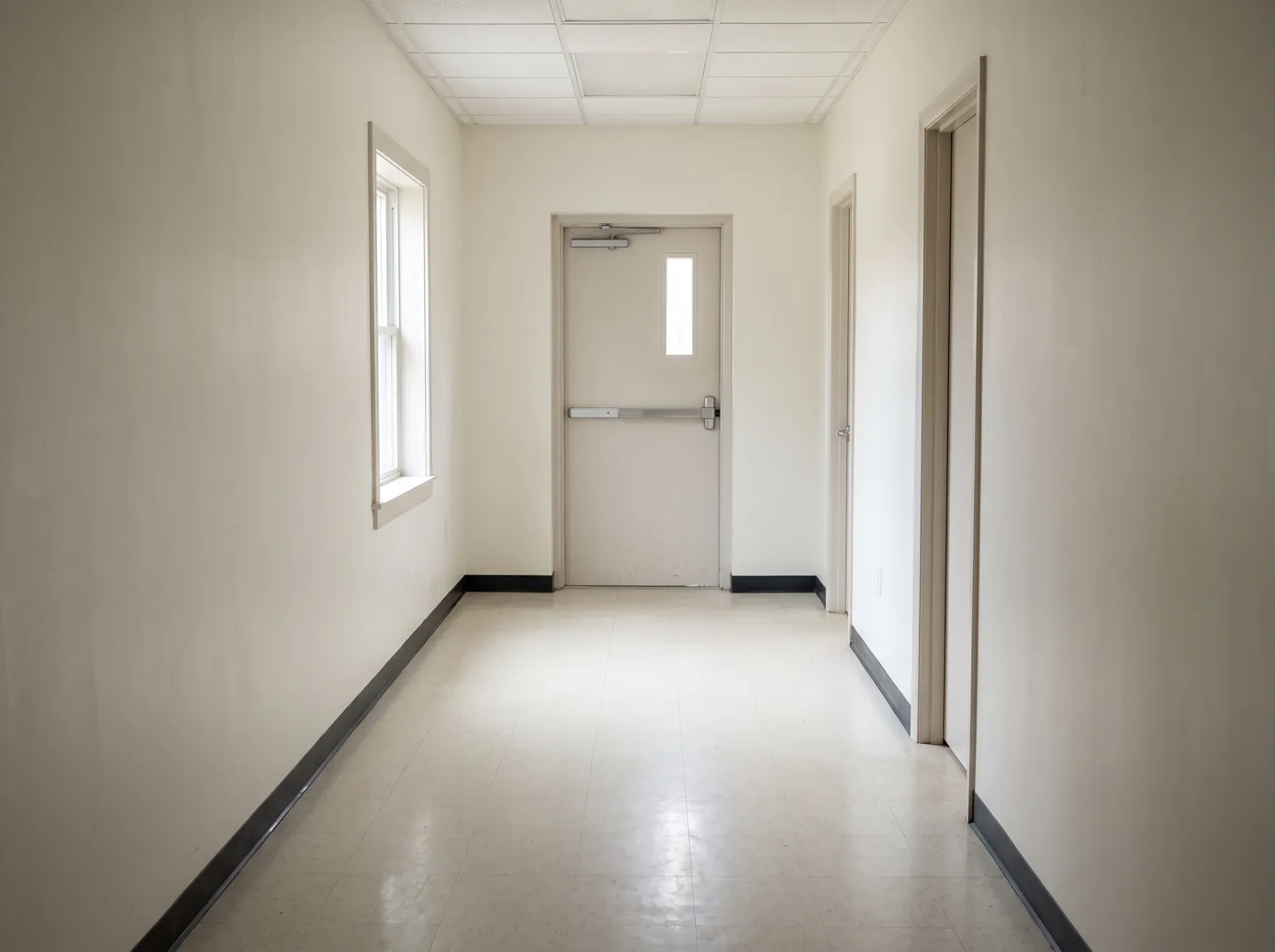
AI-generated image, not a photograph of a real person or place.
Know who is responsible
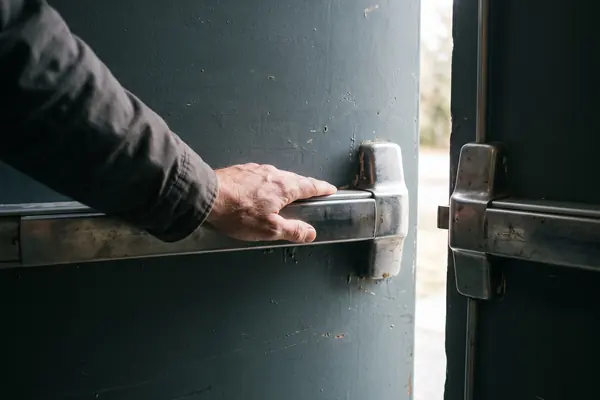
Keep exits unlocked and clear
Check before you start
Quick checks, every session
THE SHORT ANSWER
The owner leads, the hirer checks.
Fire law applies to any premises the public use. Three things worth knowing.
WHO
The responsible person
GOV.UK says whoever has control of non-domestic premises, such as an owner, landlord or occupier, is the 'responsible person'. Several must work together.
Home Office guidance says a hall owner who lets premises keeps overall responsibility, but some checks should pass to the hirer for the day they use it.
Choose a situation to see the escape time and suggested travel distance for areas with seating in rows, from Home Office guidance for places of assembly. The bar shows the fire risk level.
From Fire safety risk assessment: small and medium places of assembly (Home Office), Table 2 and escape times. A fire risk assessment decides the real figures for a building.
TWO NUMBERS WORTH KNOWING
Which guide, how long to get out.
One figure for the size of venue the guide covers, one for a normal escape time.
≤ 300
People in a medium place of assembly
The Home Office guide covers small venues up to 60 people and medium ones up to 300, including village halls, community centres and clubs.
SCOPE · HOME OFFICE
2.5 min
Escape time for normal-risk premises
The guide gives established reasonable escape times of 2 minutes for higher-risk, 2.5 for normal-risk and 3 for lower-risk premises.
ESCAPE TIME · HOME OFFICE
GOV.UK says you could be fined or go to prison for not following fire safety regulations, and local fire and rescue authorities inspect premises.
BEFORE EACH SESSION
Five checks, five minutes.
These are the guide's examples of daily or before-event checks, the kind a hiring agreement may pass to you. Follow the hall's own agreement and instructions.
Unlock the fire exits
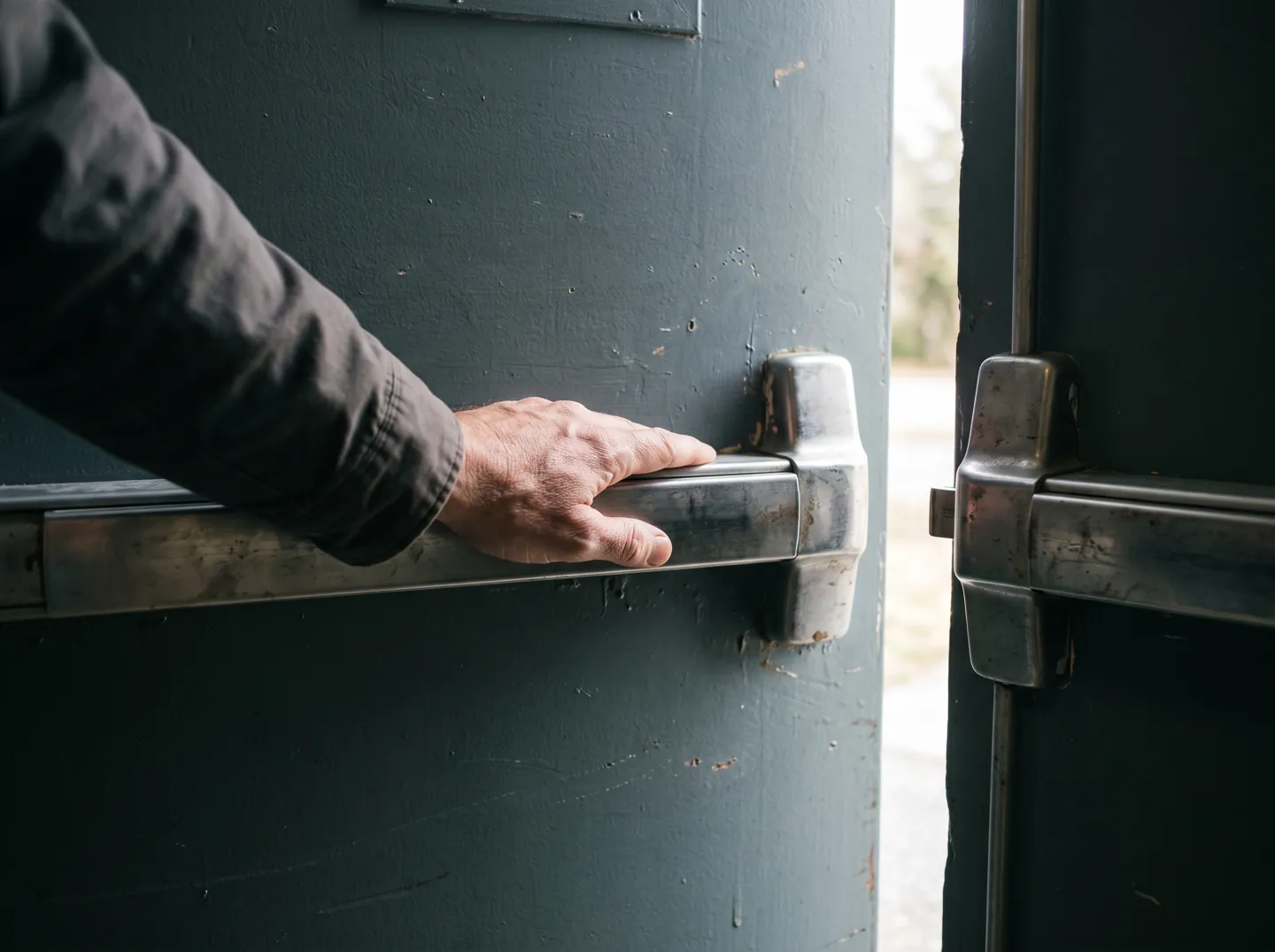
Remove bolts, padlocks and security devices from fire exits, and check doors on escape routes swing freely and close fully.
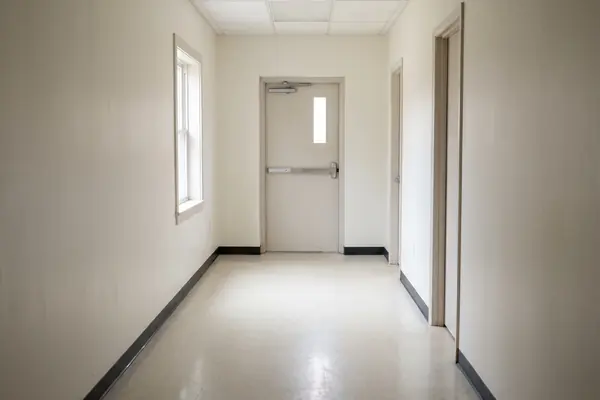
Clear the escape routes
Make sure escape routes are clear of obstructions and combustible materials, and in a good state of repair.
Check the alarm panel
Check the fire alarm panel shows the system is active and fully working.
Glance at emergency lighting
Where practical, visually check that emergency lighting units are in good repair and working.
AI-generated image, not a photograph of a real person or place.AI-generated image, not a photograph of a real person or place.
THE RESPONSIBLE PERSON
Assess, record, plan, train.
GOV.UK says the responsible person must carry out and regularly review a fire risk assessment, keep a written record of it, put fire safety measures in place, plan for an emergency and give people information and training.
The assessment covers escape routes and exits, fire detection and warning, firefighting equipment, dangerous substances, an evacuation plan and the needs of vulnerable people. You can do it yourself with the official guides or appoint a competent person; fire services can advise but cannot do it for you.
Questions
Questions people ask
Who is responsible for fire safety in a hired hall?
GOV.UK says anyone with control of non-domestic premises, such as the owner, landlord or occupier, is a 'responsible person'. The Home Office guide says an owner who hires out a village hall keeps overall responsibility, while some checks pass to the hirer.
Does a volunteer group need its own fire risk assessment?
The responsible person must have one and keep a written record. Where a group hires a hall, the guide says the hirer's management responsibilities should be defined, usually in the hiring agreement.
What should I check before a session?
The guide's examples include removing bolts and padlocks from fire exits, checking doors swing freely, keeping escape routes clear, checking the fire alarm panel and glancing at emergency lighting.
How far should people be from an exit?
It depends on the risk. For seating in rows with more than one escape route, the guide suggests 20 m in higher-risk, 32 m in normal-risk and 45 m in lower-risk areas.
Do these rules apply in Scotland and Northern Ireland?
GOV.UK says there are different rules on fire safety in Scotland and Northern Ireland. The Home Office guide applies to England.